
Subendometrial PRP

Subendometrial PRP
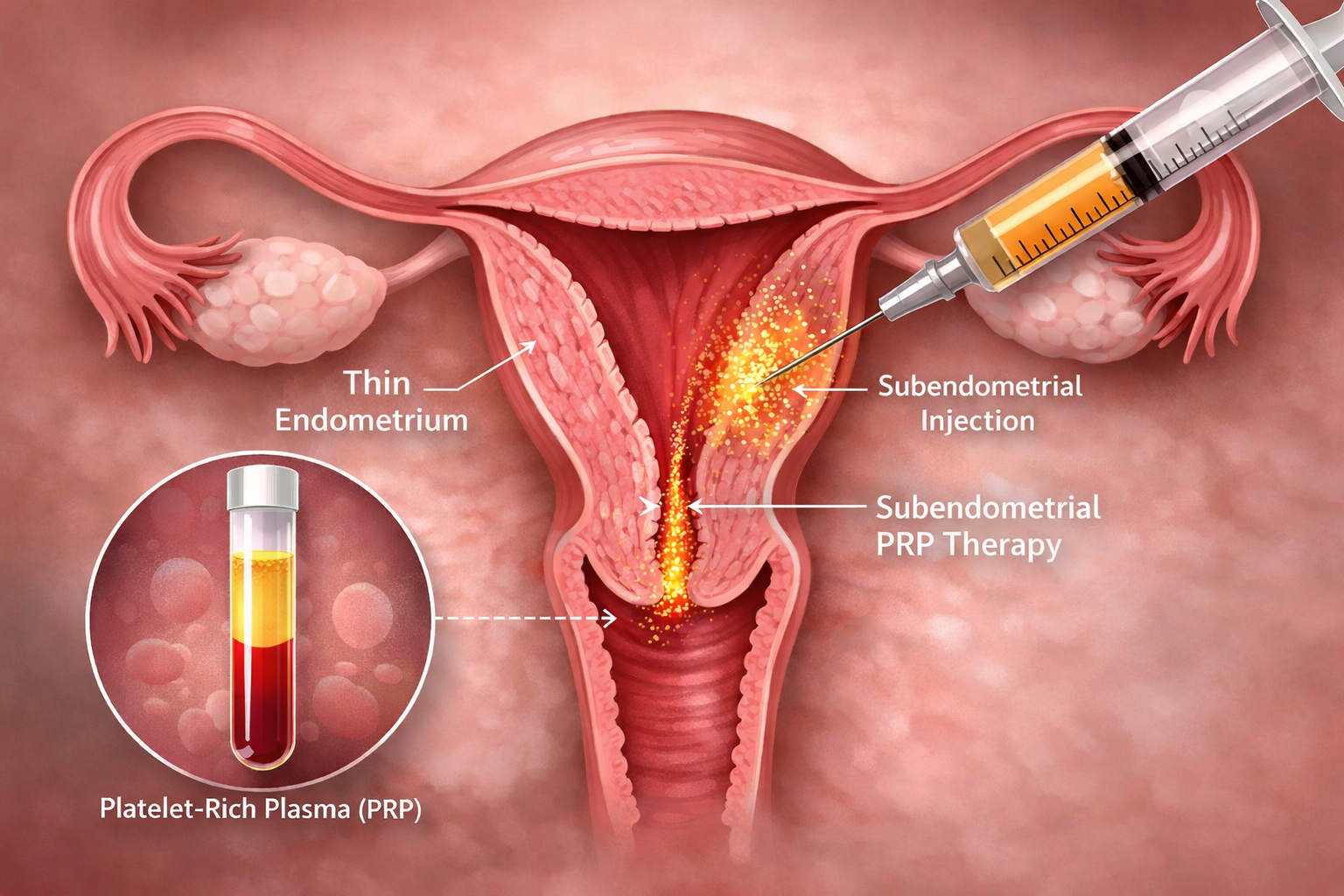
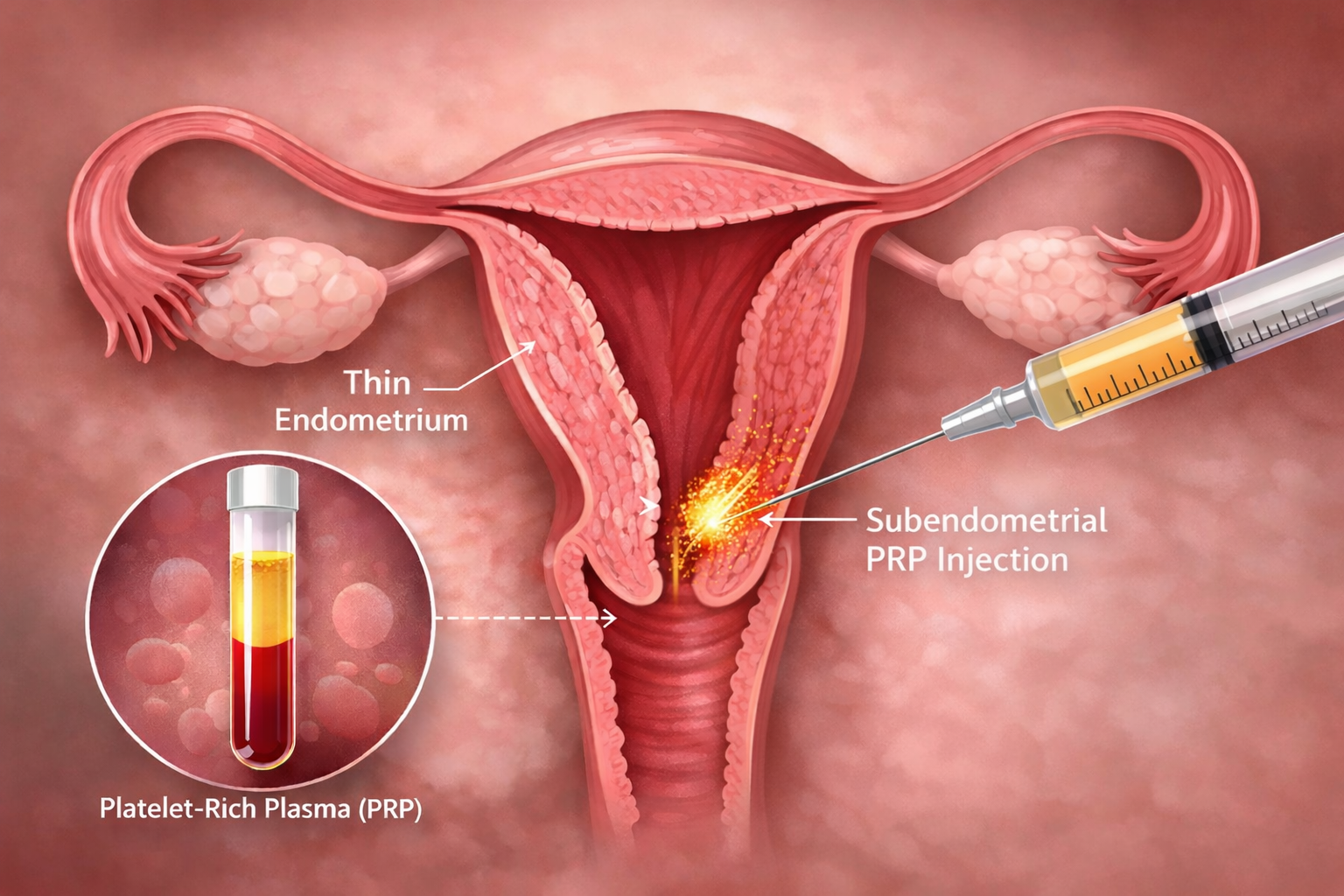
Subendometrial PRP is an advanced fertility treatment designed to improve the uterine lining by injecting Platelet-Rich Plasma directly into the subendometrial zone. This layer plays a key role in implantation and blood supply to the endometrium. The growth factors in PRP stimulate tissue regeneration and improve receptivity. It is especially helpful for women with repeated implantation failure.

Benefits of Subendometrial PRP

This treatment improves endometrial receptivity and increases the chances of embryo implantation. Since it uses autologous blood, the risk of allergy or infection is minimal. It is a minimally invasive and quick procedure with no need for hospitalization. Subendometrial PRP can significantly improve IVF success rates.
Success

Our Centers Across the Region

"With locations across the region, centers are dedicated to serving local communities with excellence, accessibility & care—wherever you are."

Who Can Benefit from This Treatment?

Women with thin endometrium, poor blood flow, or repeated IVF failures may benefit from this therapy. It is also recommended when conventional hormonal treatments fail to improve lining thickness. A thorough fertility evaluation is done before the procedure. Personalized treatment planning ensures optimal outcomes.

High Success Rates

Expert Specialists

Affordable Services

How Subendometrial PRP Works

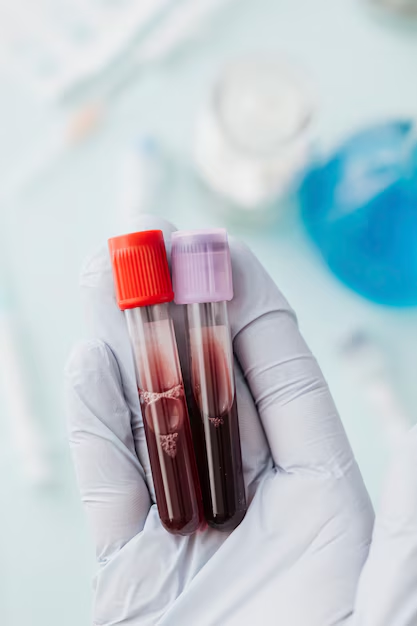
PRP is prepared from the patient’s own blood and contains concentrated platelets rich in healing growth factors. When injected into the subendometrial region, it enhances blood flow and cellular repair. This promotes better endometrial thickness and quality. The procedure is performed under ultrasound guidance for precision and safety.

Guidance

At Eva, our fertility specialists provide personalized guidance based on your unique needs. We offer professional advice, advanced treatment options, and continuous support throughout your journey.

Step 01

Subendometrial PRP Injection

The prepared PRP is carefully injected into the subendometrial region under ultrasound guidance to enhance blood flow, stimulate tissue regeneration, and improve endometrial receptivity.

Step 02

Monitoring & Embryo Transfer Planning

Endometrial thickness and blood flow are closely monitored after the procedure before scheduling embryo transfer to maximize implantation success.
Step 03
Prp
Endometrial
IVF & Embryo Creation

Frequently asked question

Yes, it is safe because it uses the patient’s own blood, reducing the risk of side effects or allergic reactions.
The procedure is minimally invasive and usually causes only mild, temporary discomfort.
Embryo transfer is usually planned after confirming adequate endometrial thickness and improved blood flow.
Yes, it enhances endometrial receptivity and can significantly improve implantation and pregnancy rates.