
Stem Cell PRP

stem Cell PRP
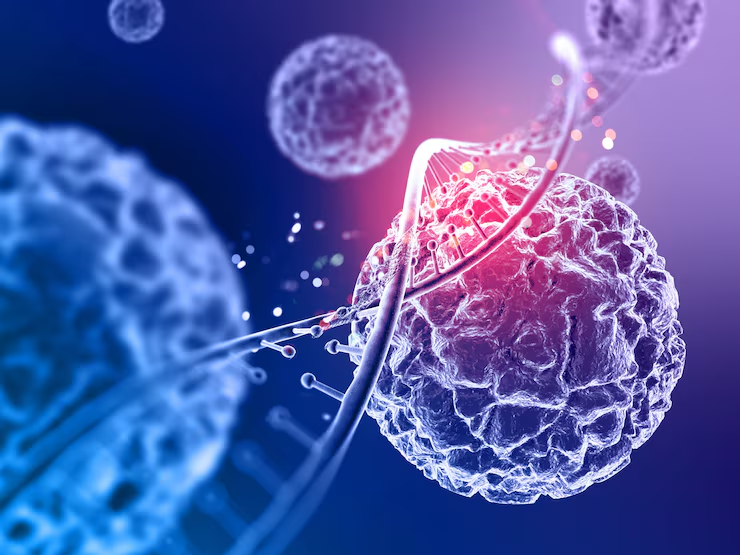
Stem Cell PRP in IVF is an advanced regenerative approach used to improve ovarian function or endometrial thickness in patients with poor fertility outcomes. In this treatment, Platelet-Rich Plasma (PRP) rich in growth factors is used (sometimes alongside stem cell based support) to stimulate tissue repair and enhance the reproductive environment before or during IVF.

When to See an Endocrinologist?

Consult a specialist if symptoms persist despite treatment, or when hormone imbalance is suspected during fertility evaluation.
Success

At Our Hospital

With centers located across the region, we are committed to providing every community with excellence, accessibility, and compassionate care wherever you are.

How Stem Cell PRP Improves

The growth factors present in PRP help activate dormant ovarian follicles, improve egg quality, and support better endometrial receptivity. This may lead to improved ovarian response during stimulation and better chances of embryo implantation in selected patients.

High Success Rates

Expert Specialists

Affordable Services

Stem Cell PRP Treatment

This treatment may be beneficial for women with low AMH levels, poor ovarian reserve, thin endometrium, premature ovarian insufficiency, or repeated IVF failures. A fertility specialist evaluates each patient to determine whether Stem Cell PRP is suitable.

Patient Evaluation & Preparation

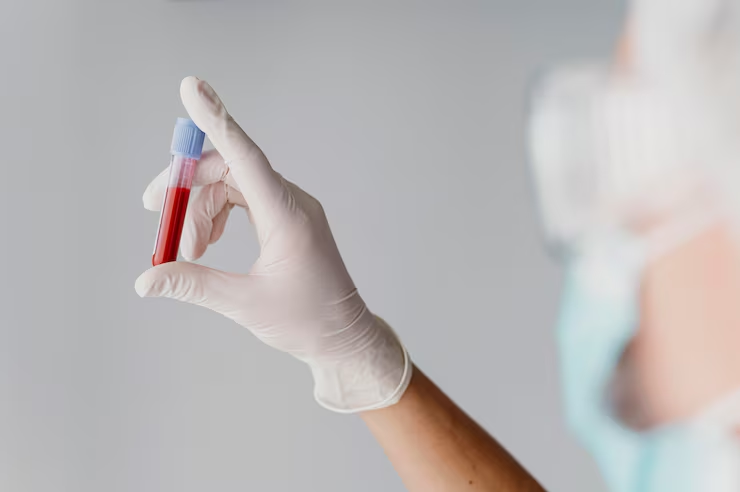
The fertility specialist reviews medical history, AMH levels, scans, and IVF history to determine whether Stem Cell PRP is suitable. Blood is then collected from the patient to prepare PRP.

Step 01

PRP Processing & Administration

The blood sample is centrifuged to isolate platelet-rich plasma. Under ultrasound guidance, the prepared PRP (with or without stem cell support) is carefully injected into the ovaries or uterus, depending on the treatment goal.

Step 02

Monitoring & IVF Planning

Hormone levels and follicle/endometrial response are monitored over the next few weeks. Based on improvement, the doctor schedules the IVF cycle at the optimal time for better outcomes.

Step 03
IUI Explained Simply
Consultation & Collection

Frequently asked question

The procedure is minimally invasive and usually done under sedation or anesthesia, so discomfort is minimal.
Since PRP is prepared from the patient’s own blood, the risk of allergy is very low. However, it is still considered an emerging therapy.
No treatment can guarantee pregnancy. It may improve the chances of IVF success in selected patients.
It may be recommended for women with low AMH, poor ovarian reserve, thin endometrium, premature ovarian insufficiency, or repeated IVF failure.
Hormonal or endometrial improvement may be seen within 4–12 weeks, depending on individual response.